
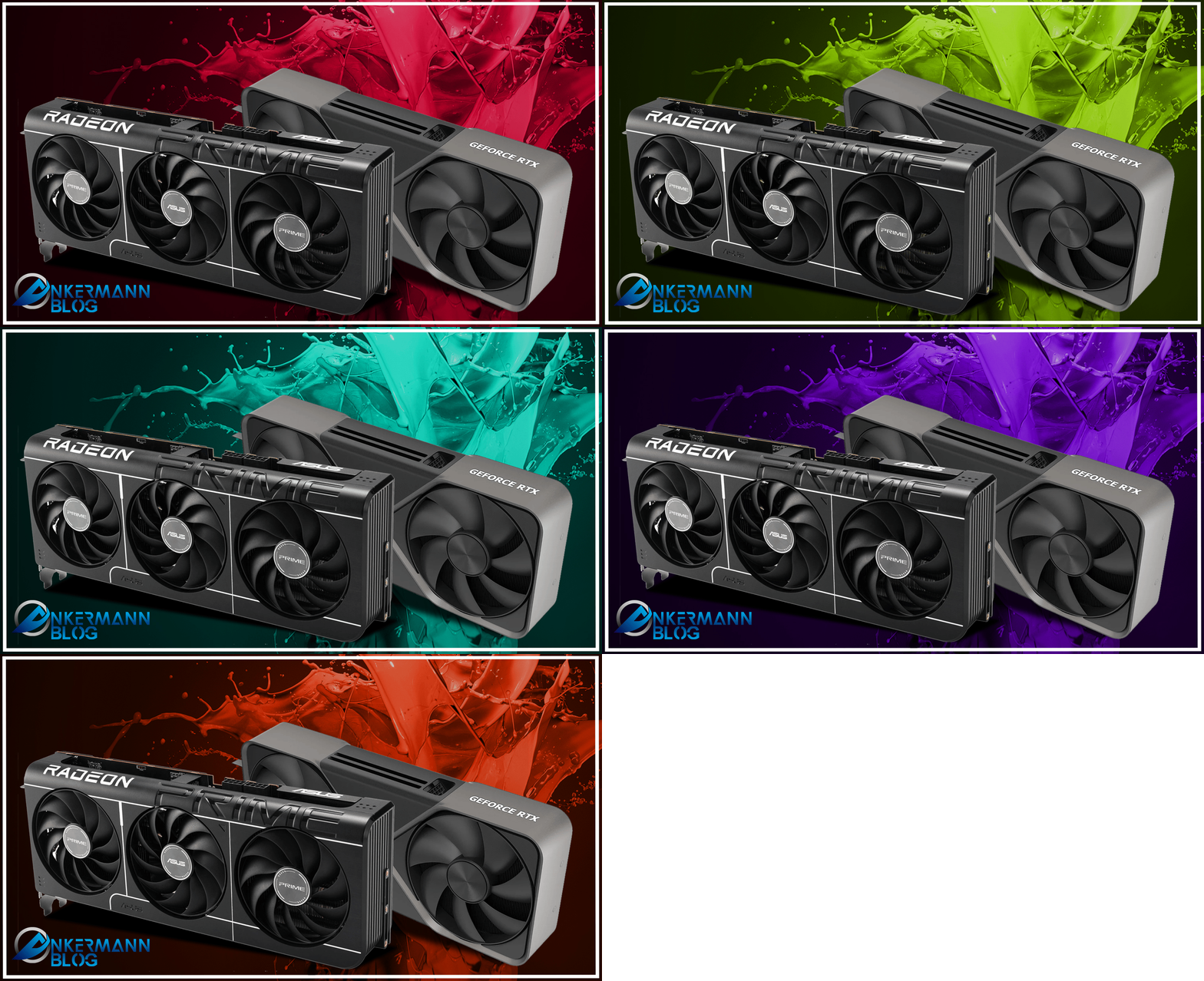
Which graphics card is really worth it in 2026?
Which PC is right for you?
Fortnite, Minecraft & Dead by Daylight – Which PC is right for them?

The new WildRabbit with a unique design!
Which graphics card is really worth it in 2026?
Anyone looking for a new graphics card in 2026 has more choice than ever—but that is precisely what makes the decision no easier. NVIDIA RTX 30, RTX 40, RTX 50 or perhaps AMD Radeon? Then there are terms like DLSS, Frame Generation, ray tracing, and VRAM.
Yet the most important question is actually much simpler:
Which graphics card suits your games, your resolution, and your budget?
For the latest generation is not automatically the best choice.
RTX 30: Older, but far from obsolete

Anyone currently gaming in Full HD or 1440p and satisfied with their performance doesn't need to upgrade simply because of a new generation.
An upgrade is particularly worthwhile if your current card is actually reaching its limits—for example, due to low frame rates, a switch to a higher resolution, or the desire to use modern ray tracing settings.
The simple rule is therefore:
Don't upgrade just because something new has come out. Upgrade when you actually lack performance.
RTX 40: Still interesting

This can make games appear visibly smoother—especially those with demanding graphics and ray tracing.
As a result, cards like the RTX 4070, RTX 4070 Super, or RTX 4070 Ti Super remain far from unappealing, even in 2026. Especially when models from the previous generation are available at lower prices, they can be a very sensible alternative to new cards. After all:
A new generation does not automatically make the previous one bad.
The actual price is the deciding factor.
RTX 50: New features, but not automatically necessary

DLSS, Multi-Frame Generation, and other technologies can significantly increase the perceived frame rate and make a major difference, especially with ray tracing.
However, it is important to distinguish between classic GPU performance and additionally generated frames.
A graphics card using frame generation can display very high FPS without actually possessing the same raw performance as a significantly more powerful model.
That does not mean the technology is bad—quite the opposite. It can offer a genuine advantage in gaming. However, it should not be the sole reason for buying a new graphics card.
And what about AMD?

With the Radeon RX 9000 series, AMD offers several models featuring generous amounts of graphics memory. Cards such as the RX 9070 and RX 9070 XT can be compelling alternatives to NVIDIA, particularly for 1440p gaming.
The major advantage often lies in the combination of:
- high-end classic gaming performance
- plenty of VRAM
- attractive price-performance ratio
NVIDIA, on the other hand, scores particularly well with its ecosystem centered around DLSS, ray tracing, and AI-based rendering technologies.
The question should therefore not be:
AMD or NVIDIA – which is better?
But rather:
What strengths do I really need?
8 GB or 16 GB VRAM?
One factor is becoming increasingly important when buying a graphics card: video memory (VRAM).
8 GB of VRAM will still be sufficient for many games in 2026. Nevertheless, it pays to look closely when purchasing a new mid-range graphics card. Modern games utilize high-resolution textures, more complex worlds, and—increasingly—ray tracing.
Extra video memory can be beneficial in the long run, especially at 1440p resolution. If two cards are priced similarly and one offers 16 GB instead of 8 GB, that is a factor that should not be ignored.
At the same time, however, the following also applies:
More VRAM alone does not automatically make a graphics card faster.
It is just one part of the overall package.
Which graphics card matches which resolution?
Full HD / 1080p
Most players don't need a high-end graphics card here.
A good mid-range GPU is often perfectly adequate. Instead of sinking as much money as possible into the graphics card, the system as a whole should remain balanced.
1440p
For many gamers, this is currently the most interesting segment.
1440p offers significantly better image quality than Full HD without immediately demanding the extremely high GPU performance required for 4K.
Comparing current Radeon and GeForce models is particularly worthwhile here.
4K and Raytracing
Anyone wanting maximum detail, 4K resolution, and powerful ray tracing all at once requires significantly more graphics performance.
This is where high-end GPUs make more sense—though prices rise substantially as a result.
However, for a typical mid-range gaming PC, this level of performance is often unnecessary.
When is an upgrade really worth it?
Before you buy a new graphics card, you should ask yourself four questions:
Which games do I play?
At what resolution do I play?
What frame rate (FPS) do I want to achieve?
Which graphics features are important to me?
If your current graphics card still meets these requirements, there is no reason to replace it simply because of a new generation.
If, on the other hand, you switch from Full HD to 1440p, want to play modern AAA games with high detail settings, or wish to make greater use of ray tracing, an upgrade might make sense.
Conclusion: Don't buy based on model number.
The graphics card market in 2026 clearly shows:
New isn't automatically better for you.
The RTX 30 series can still be sufficient. The RTX 40 series can be very attractive at the right price. The RTX 50 series brings new technologies and additional capabilities. At the same time, AMD offers strong alternatives with high gaming performance and often generous amounts of video memory.
Ultimately, therefore, the logo on the graphics card shouldn't be the deciding factor.
The deciding factors are the games you play, your resolution, your expectations, and your budget.
After all, the most sensible graphics card isn't necessarily the most expensive or the newest one—but rather the one whose performance you actually use.