
Which PC is right for you?

Fortnite, Minecraft & Dead by Daylight – Which PC is right for them?

The new WildRabbit with a unique design!
High RAM prices
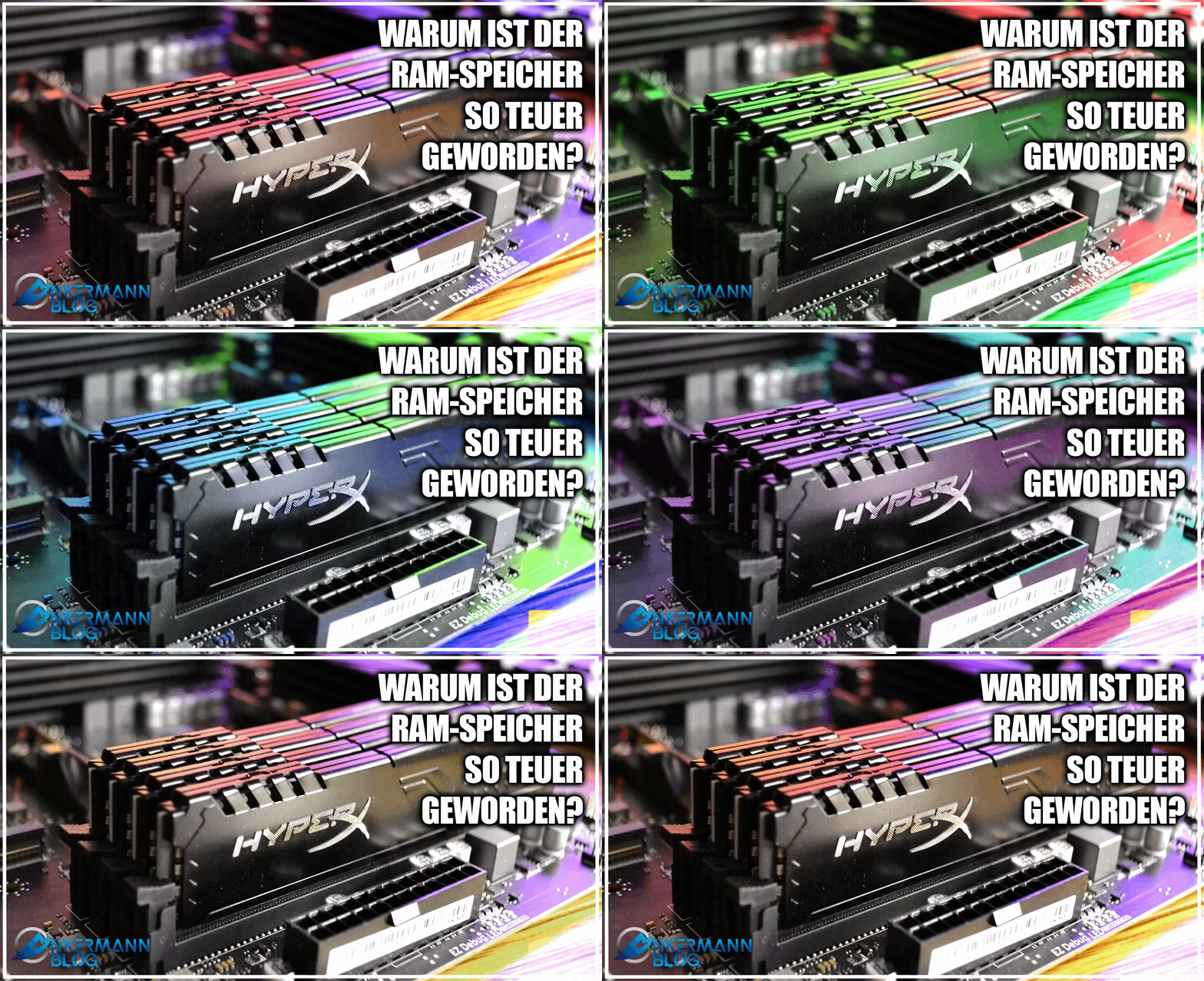
Prices for computer memory (RAM) have risen significantly in recent months. Many customers are wondering: Why does RAM suddenly cost so much again? The answer is complex, as several factors are simultaneously affecting the market. In this article, we explain in clear terms what lies behind the high RAM prices, which developments are influencing the industry, and what buyers should look out for now.
DDR5 is becoming the standard – and driving up prices.
With the current platforms from AMD (Ryzen 7000/8000) and Intel (12th-14th Gen), DDR5 is finally establishing itself as the new standard. This ensures:
Increased demand
Higher production costs
Reduced DDR4 availability
DDR4 is still used, but manufacturers are increasingly shifting their capacities to DDR5. This means that DDR4 is not cheaper, but in some cases even more expensive.
Rising production costs in the semiconductor industry
The manufacturing of RAM chips is extremely energy- and technology-intensive. Costs are currently rising in several areas:
Energy prices in Asia and the USA
More expensive cleanroom infrastructure
New manufacturing technologies such as EUV lithography
High investments in new chip generations
Since only a few manufacturers dominate the market (Samsung, SK Hynix, Micron), these costs directly affect final prices.
Global supply chains remain strained.
Even after the pandemic, the semiconductor industry's supply chains are not completely stable:
Fluctuating raw material prices
High transport costs
Geopolitical tensions (US–China)
Export restrictions on certain chip technologies
These factors mean that RAM cannot be produced and transported as cheaply as it used to be.
Manufacturers are deliberately throttling production.
RAM is a classic cyclical product: Periods of overproduction lead to extremely low prices—and that is what manufacturers want to avoid.
The following is currently happening:
Inventory levels were reduced.
Production volumes were reduced.
Prices rise automatically as a result.
This is a normal market mechanism, but it is noticeable to end customers.
New technologies are making RAM more expensive.
Technically, DDR5 is significantly more complex than DDR4:
On‑Die ECC
Integrated PMIC chips
Higher clock speeds
Multilayer PCB layouts
These components increase production costs and thus the selling price.
AI boom and server demand weigh on the market
The global AI boom means that large data centers require enormous amounts of RAM - namely server RAM, which comes from the same production lines as desktop RAM.
Cloud providers are buying on a massive scale.
AI servers require an enormous amount of RAM.
Less capacity remains for the consumer market.
If server customers pay more, prices rise for everyone.
Why don't prices simply fall again?
Many are hoping for a quick easing of the situation—but several factors are preventing this:
Manufacturers want price stability.
DDR5 remains the standard in the long term.
Server demand remains high
Production costs are no longer falling back to their previous levels.
In short: RAM won't be as cheap again as it was in 2022/2023.
The Bottom Line: Why RAM Is Currently So Expensive
The high RAM prices are the result of:
rising demand
more expensive production
global supply chain problems
Manufacturer strategies
technological innovations
AI and server boom
For buyers, this means: Prices will stabilize—but will not fall to the previous low.